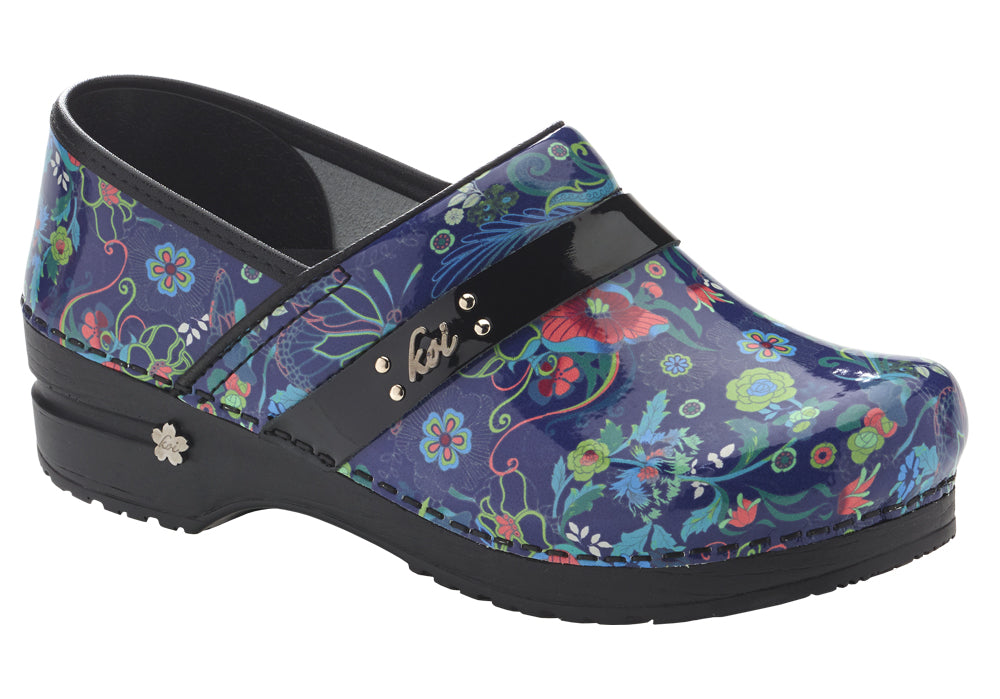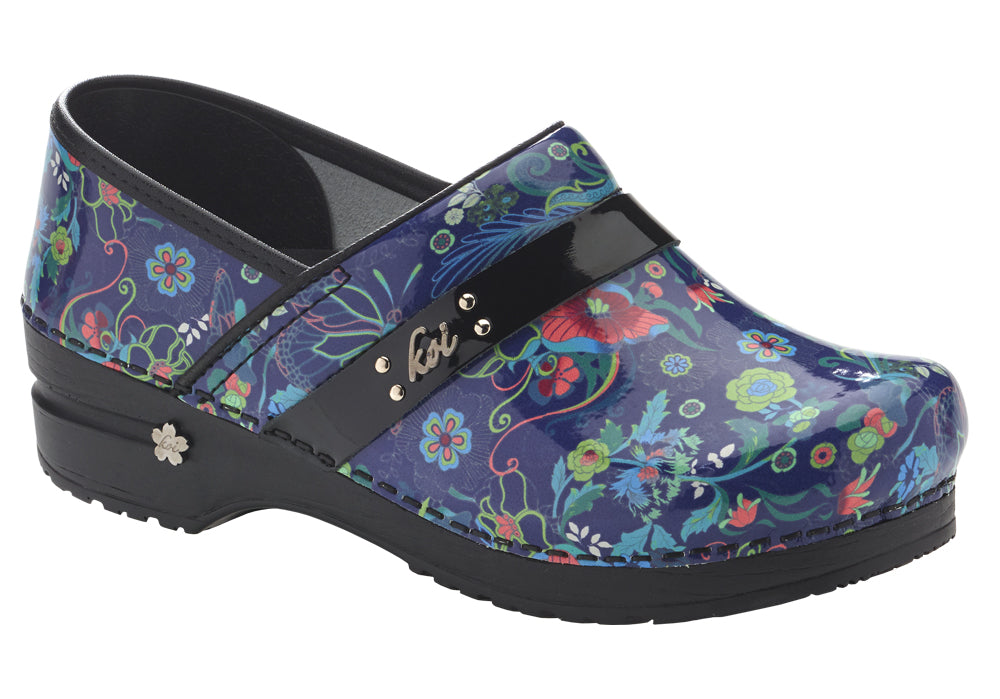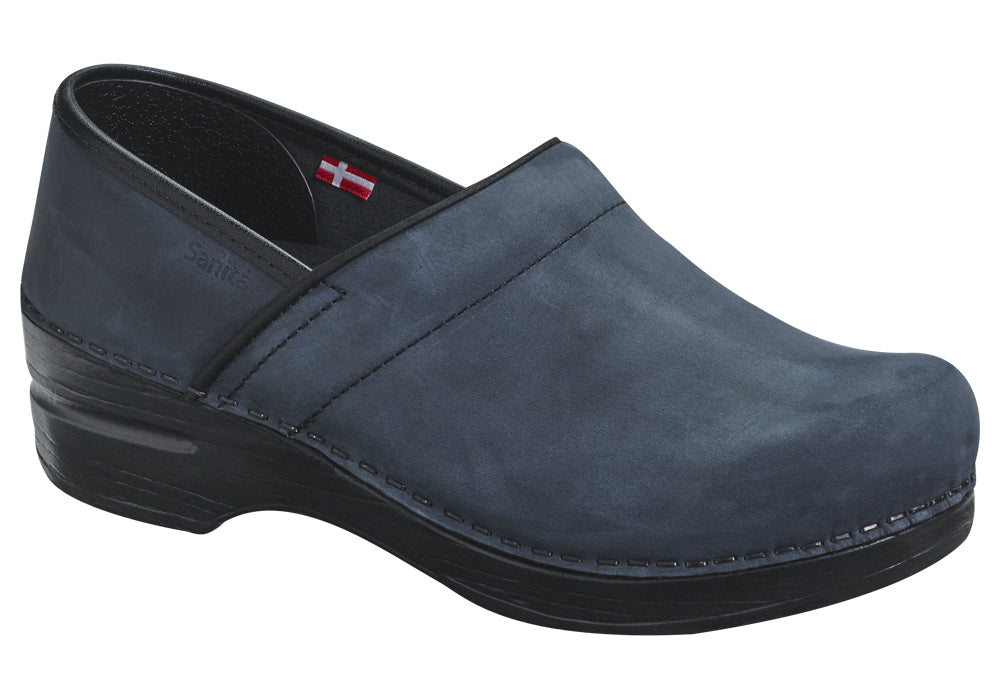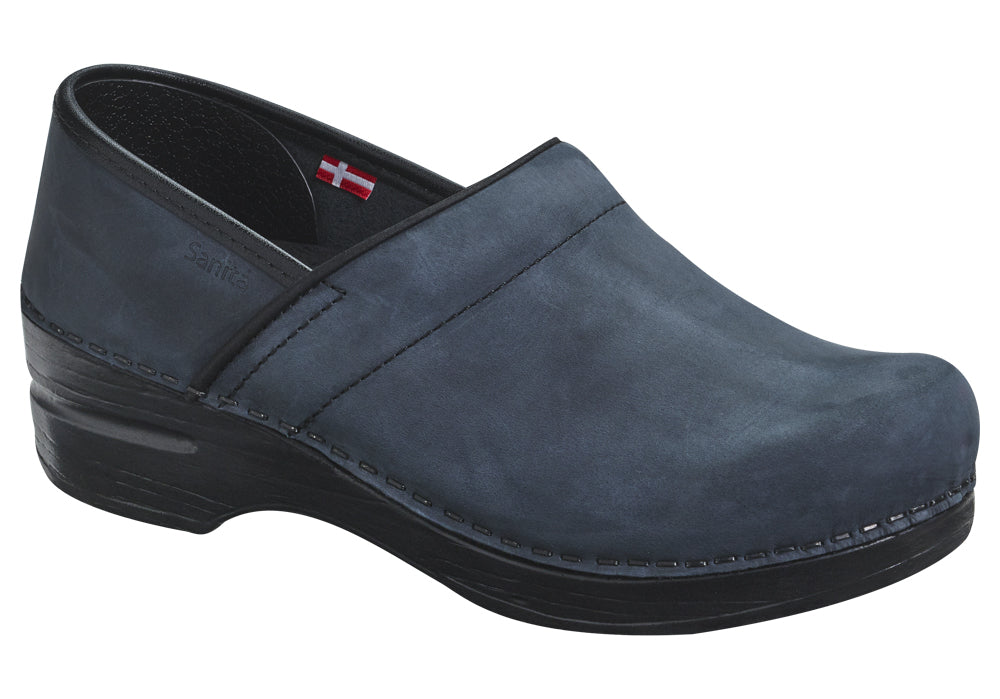


Discover the story behind Sanita, the original Danish clog brand handcrafted in Europe since 1907. From a one-man workshop in Denmark to generations of traditional craftsmanship, explore the heritage, construction, and enduring design that continue to define Sanita today.
There's a version of the clog everywhere right now — on runways, in fast fashion windows, stacked in big-box shoe aisles. Most of it borrows a silhouette that's centuries old and calls it new. Sanita didn't borrow the silhouette. We're where a meaningful piece of that history actually happened.
Sanita clogs have been handcrafted since 1907, when a young Danish apprentice named Christen Meldgaard Andersen opened a one-man workshop in Herning, Denmark. Everything the brand makes today — the structure underfoot, the handcrafted process, the insistence on getting the fit right — traces back to that workshop. This is the story of how it started, and why it still matters to what a "real" Danish clog is supposed to feel like.
Wooden footwear is not a Danish invention — the clog's roots run deep across Northern Europe, likely stretching back centuries before anyone wrote them down. Wood was cheap, durable, and everywhere, which made it the obvious material for people who worked all day outdoors: farmers, laborers, tradespeople who needed something sturdy underfoot and couldn't afford leather boots.
The craft was serious enough that guilds formed around it. A clog-makers' guild was established in the Netherlands as early as the 1570s, with similar trade associations following in England not long after. Construction varied by region — some clogs were carved as a single block of wood covering the whole foot, others paired a wooden sole with a leather or textile upper — but the core idea stayed consistent for generations: a rigid, supportive base built to outlast whatever the workday threw at it.
That's the tradition Christen Meldgaard Andersen grew up inside, in the Danish smallholding of Vorgod, born in 1881.
At 18, Christen began apprenticing as a slipper maker — learning the hand skills that would eventually become the foundation of Sanita. On February 4, 1907, he opened his own shop and workshop on Skolegade in Herning, Denmark. That date is the one Sanita points back to. Not a founding myth, not a marketing anniversary — an actual address, on an actual street, where one craftsman started making clogs by hand.
The story that gets passed down inside the company is a small one, but it says a lot about how the business actually grew: Christen would ride out on his bicycle with two pairs of clogs tucked under each arm, calling on local general stores to build sales one pair at a time. There was no factory behind him yet, just a workshop, a bicycle, and a product he believed in enough to sell door to door.
By 1924, sales had grown enough that Christen moved the business to a larger space on Mindegade, just over a mile away. In 1940, his son Johannes joined the company, becoming a co-owner seven years later. That handoff from father to son is part of why Sanita still talks about craftsmanship as something inherited rather than manufactured. The people making the decisions in those early decades had literally learned the trade at home.
Clog production was transferred to an independent company, A/S Sanita Trætøj, in 1965, based on Platanvej in Herning — the same town where it all began. The business was growing, but it hadn't left home.
A brand that only ever repeats itself doesn't last 100+ years — it has to keep adapting while protecting what actually matters. In 1970, Sanita introduced colorful clogs and wooden-soled boots, its biggest style hit of that year. In 1988, the flexible SanFlex sole arrived, meaning clogs no longer had to be built with wood as the only sole option.
That's an important distinction for anyone comparing a "clog-look" shoe to an actual clog: the wood-bottom construction isn't a fashion detail Sanita added for aesthetics. It's the starting point the whole brand grew out of, and even as materials expanded, the structure and craftsmanship principles behind that original wooden sole carried forward into every style that came after it.
Plenty of shoes today borrow the clog shape — a closed or half-open toe, a raised, rigid base, a slip-on silhouette. Very few of them are built the way an original Danish clog is built.
A real Danish clog is defined less by its outline and more by what's underneath it:
A structured, supportive base, historically wood, engineered to hold its shape and support the foot rather than collapse underfoot like a soft foam sole.
Handcrafted construction, where uppers are shaped and finished by hand rather than injection-molded in a single step.
Natural material variation. Genuine wood-bottom and leather construction means no two pairs are identical — grain, tone, and finish shift slightly from pair to pair, which is a sign of the material, not a flaw.
A history that predates the trend. The silhouette shows up in fast fashion every few years. The craft behind an original doesn't disappear between trend cycles — it's been running continuously since 1907.
Sanita formed its U.S. division in 2001, and in 2004 the Original Collection earned the American Podiatric Medical Association's Seal of Acceptance. By 2007, the company was producing more than a million pairs of clogs a year. In 2009, Sanita changed ownership and expanded its distributor network to more than 50 countries. From 2013 onward, the collection grew well beyond the workshop's original workwear roots into everyday, fashion-conscious comfort — while keeping the wood-bottom heritage styles that started it all front and center.
That heritage line lives on today in Sanita's Wood Heritage collection: clogs and boots built on the same wood-bottom principles Christen Meldgaard Andersen was working with in 1907, updated for how people actually want to dress and feel now. If you've ever wondered what separates an original from an imitation, this is where you'll feel the difference — not on a spec sheet, but the moment you put a pair on.
Explore the Wood Heritage collection to see where that 1907 workshop ended up, or read the full Our Heritage timeline for the complete year-by-year story.
Register to receive a notification when this item comes back in stock.