

Ever wonder what makes Sanita clogs different? Take a behind-the-scenes look at the craftsmanship, materials, and construction techniques that have made Sanita a trusted choice for hardworking professionals for generations.
When you slip on a pair of Sanita clogs, you're wearing more than comfortable work shoes. You're wearing a product shaped by generations of European craftsmanship, traditional manufacturing techniques, and a philosophy that values quality over speed.
In an age where much of the footwear industry has shifted toward automation and mass production, Sanita continues to rely on time-tested construction methods that prioritize consistency, durability, and attention to detail. While technology has improved many aspects of manufacturing, some parts of making a great clog simply can't be rushed.
Here's a closer look at how Sanita clogs are made—and why those construction decisions still matter today.
Every great shoe starts with a great foundation. For Sanita, that foundation is the shoe last—the foot-shaped mold around which every clog is built. The last determines the overall shape, fit, balance, and feel of the finished shoe.
Creating the right last isn't just about matching a shoe size. It's about designing footwear that provides comfort and support during long days on your feet. Every curve, angle, and proportion is carefully considered because even small adjustments can affect how a shoe feels after hours of wear. It's one of the most important (and least visible) parts of the shoemaking process.
Many modern shoes are assembled almost entirely by automated machinery. Sanita takes a different approach.
Each pair is handcrafted by skilled craftspeople who oversee key stages of construction. Rather than relying solely on machines, experienced hands guide the process to ensure every component is assembled with care.
This approach takes more time than mass production, but it's consistent with the values that have defined Sanita for generations: craftsmanship, attention to detail, and making products that are built to last.
It's one of the reasons Sanita continues to describe its footwear as handcrafted in Europe rather than simply manufactured.

Walk through a Sanita production facility and you'll notice something unexpected.
Alongside modern manufacturing tools, you'll find traditional equipment that has been part of the shoemaking process for decades. Some of these machines have been carefully maintained for generations because they continue to perform their specific tasks exceptionally well.
Rather than replacing proven equipment simply because it's old, Sanita values the consistency and precision these machines help deliver.
It's an approach that reflects the brand's philosophy: if something works well and contributes to a better product, there's no reason to replace it.

One of the defining characteristics of many traditional clogs is the way the upper is secured to the sole.
Rather than relying exclusively on adhesives or fully automated assembly, Sanita continues to use hand-stapling during production on many of its professional styles.
This isn't simply a decorative detail—it's an important part of the clog's construction and a hallmark of traditional European shoemaking. Each staple is placed by skilled craftspeople, creating a secure connection between the upper and the sole while preserving the authentic look that has become synonymous with classic Danish clogs.
It's a process that requires precision, experience, and craftsmanship—qualities that simply can't be replicated by high-speed automation alone.
One of the unique characteristics of handcrafted footwear is that every pair carries subtle variations.
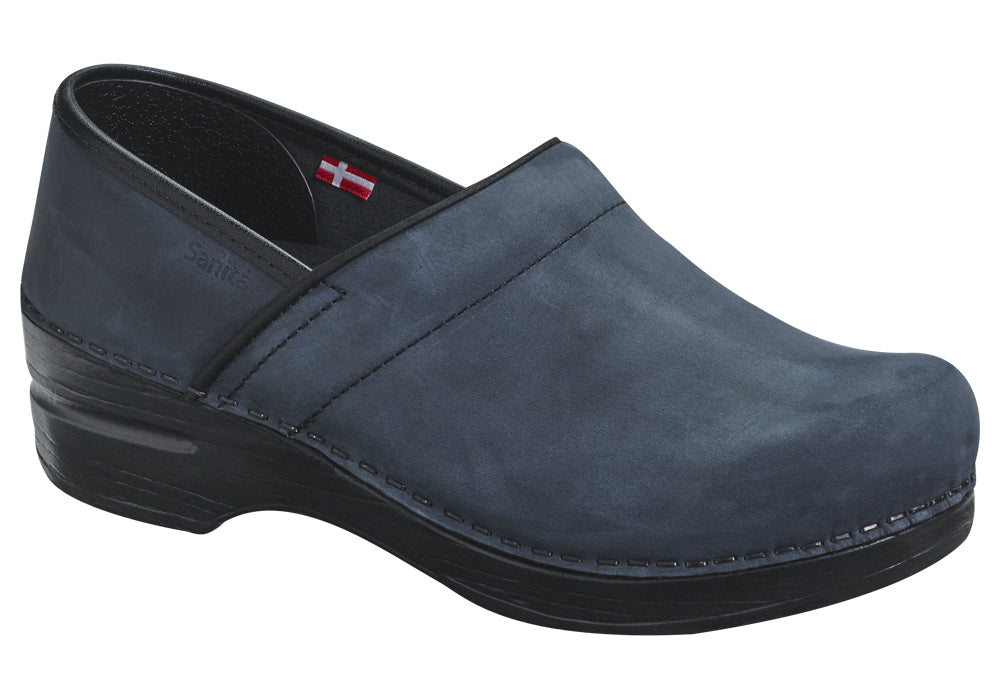
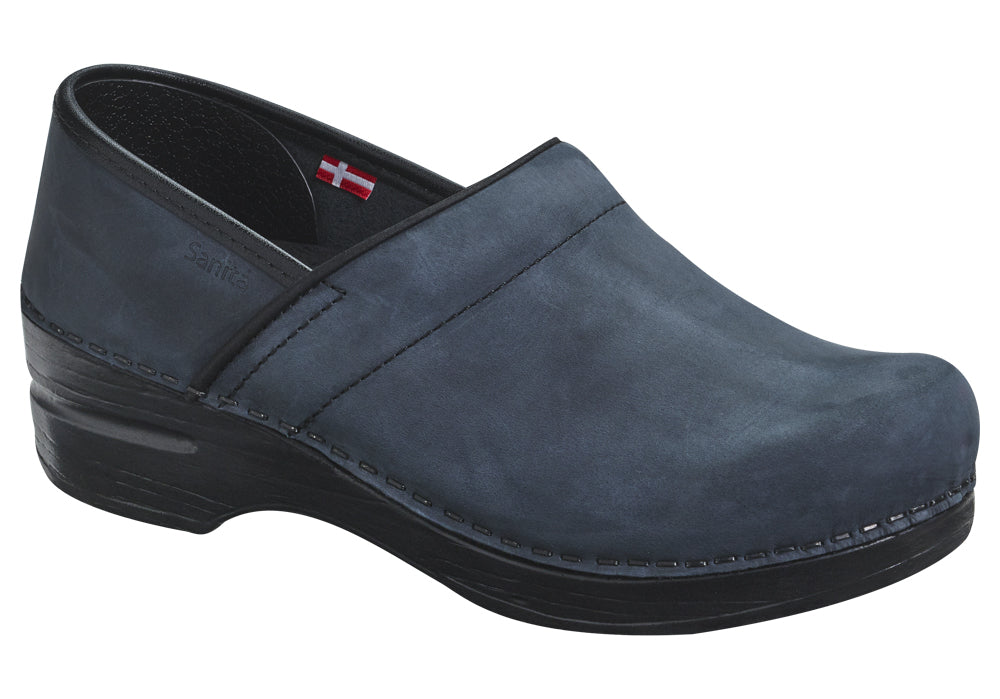
Because natural leather has its own grain, texture, and character, no two hides are exactly the same. Likewise, small differences introduced during hand assembly are a natural result of traditional craftsmanship.
These variations aren't imperfections—they're part of what makes handcrafted footwear unique.
Every pair of Sanita clogs reflects the individual materials and skilled hands involved in its construction, giving each shoe its own character while maintaining the quality and performance customers expect.

Sanita has spent decades designing footwear for people whose jobs demand reliability every day.
Healthcare professionals, chefs, teachers, hospitality workers, and countless others depend on shoes that can keep up with long hours of standing and walking. That's why every construction decision—from the shape of the last to the way each shoe is assembled—is made with real-world performance in mind.
The result is footwear that's designed not only to look timeless, but to provide dependable comfort throughout demanding workdays.
Fashion trends come and go, but thoughtful craftsmanship never goes out of style.
Sanita's commitment to traditional construction methods reflects a belief that quality is built through experience, patience, and attention to detail. By combining generations of shoemaking knowledge with carefully selected materials, the brand continues to create footwear that honors its Danish heritage while meeting the needs of today's professionals.
It's an approach that values doing things the right way—not simply the fastest way.

Sanita clogs are handcrafted in Europe, continuing a tradition of European shoemaking that dates back more than a century.
A shoe last is a foot-shaped mold used during the shoemaking process. It determines the shape, fit, and proportions of the finished shoe.
While modern equipment is used throughout the manufacturing process, many important stages of production are completed by skilled craftspeople using traditional techniques, including hand assembly and hand-stapling on many professional styles.
Natural leather varies in grain and texture, and handcrafted construction introduces subtle differences between pairs. These small variations are a hallmark of authentic craftsmanship and contribute to the unique character of each pair.
Every pair of Sanita clogs tells the story of thoughtful design, skilled craftsmanship, and a commitment to quality that's been passed down through generations. From carefully shaped shoe lasts and traditional equipment to hand-stapled construction and the natural character of genuine leather, every detail is part of an intentional process—not a shortcut.
Register to receive a notification when this item comes back in stock.