

“Slip-resistant” can mean very different things from one shoe to another. Learn how ASTM testing evaluates footwear traction, what the results actually measure, and why proper certification matters when choosing shoes for wet or slippery environments.
"Slip-resistant" is one of the most overused phrases in footwear. It shows up on work boots, kitchen clogs, hospital shoes, even fashion sneakers, often with nothing behind it but a marketing team's confidence in the tread pattern. If you've ever bought a "slip-resistant" shoe that still slid out from under you on a wet floor, you already know the label alone doesn't tell you much.
The difference between a shoe that's genuinely tested and one that just says the right words comes down to one thing: whether it's been through an actual, standardized test, and which one.
In the US, there's no law stopping a brand from printing "slip-resistant" on a shoe box. That means the phrase can mean "we ran this shoe through an independent lab test with defined pass/fail thresholds" or it can mean "the outsole has some grooves in it and we're pretty sure that helps."
Both shoes can use the exact same words on the label. Only one of them has data behind it.
ASTM International (formerly the American Society for Testing and Materials) maintains the test method most widely used in the US to evaluate footwear slip resistance: ASTM F2913. It measures the dynamic coefficient of friction, essentially how much grip exists between the shoe and a walking surface while the shoe is in motion, not just sitting still on the floor.
What makes F2913 useful is that it tests the whole shoe the way you'd actually wear it, not just a scrap of sole rubber in a lab. It checks grip at the moments that matter most in a step: when the heel lands, when the foot is flat, and when it pushes off. And it does all of this on wet, dry, and even oily surfaces, mimicking the kind of conditions a workplace floor might throw at you.
A related standard, ASTM F3445, sets the score a shoe must meet to earn that slip-resistant label. Simply put, F2913 is the test, and F3445 is the passing grade.
It would be easier, and cheaper, to just test a small piece of outsole material and call it done. Some brands do exactly that.
The problem is that a shoe is more than its rubber compound. How the sole flexes under body weight, how the tread pattern actually contacts the floor during a real step, how the shoe is constructed and weighted- all of that changes the actual grip you get while wearing it. A material sample tested in isolation can look great on paper and still behave differently once it's built into a finished shoe on someone's foot.
Whole-shoe testing exists specifically to close that gap between "this rubber is slip-resistant" and "this shoe is slip-resistant."
Here's the part that matters most for anyone actually shopping: you can't tell any of this from a product photo. Two shoes can sit side by side on a shelf, both labeled "slip-resistant," and one of them may have been tested as a complete shoe across multiple contaminants and gait phases, while the other was never tested at all beyond an internal opinion.
That's not necessarily dishonest. It's just a gap most shoppers never think to ask about, because the label looks the same either way.
A few questions cut through the marketing noise quickly:
Was the shoe tested under a recognized standard, like ASTM F2913, or is "slip-resistant" just a description with no test behind it?
Was testing done on wet or contaminated surfaces, not just a clean, dry lab floor?
Was the whole assembled shoe tested, or just a piece of the outsole material?
If a brand can answer all three clearly, that's a meaningfully different claim than a shoe that simply looks like it should grip well.
This isn't just a footwear-industry technicality. It's the standard Sanita's own certified slip-resistant clogs are built to meet.
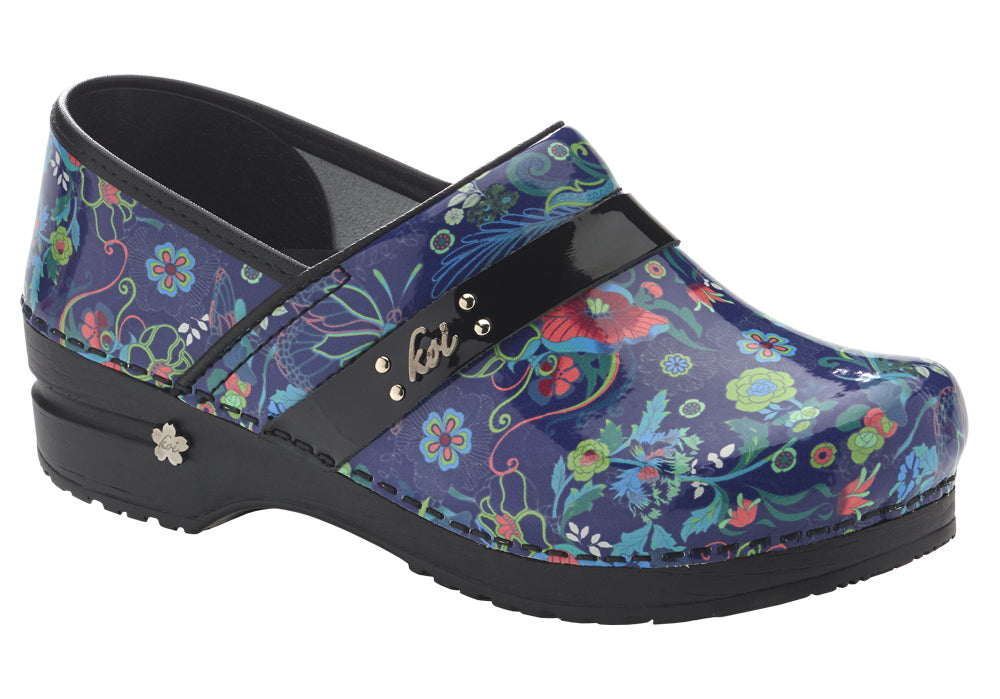
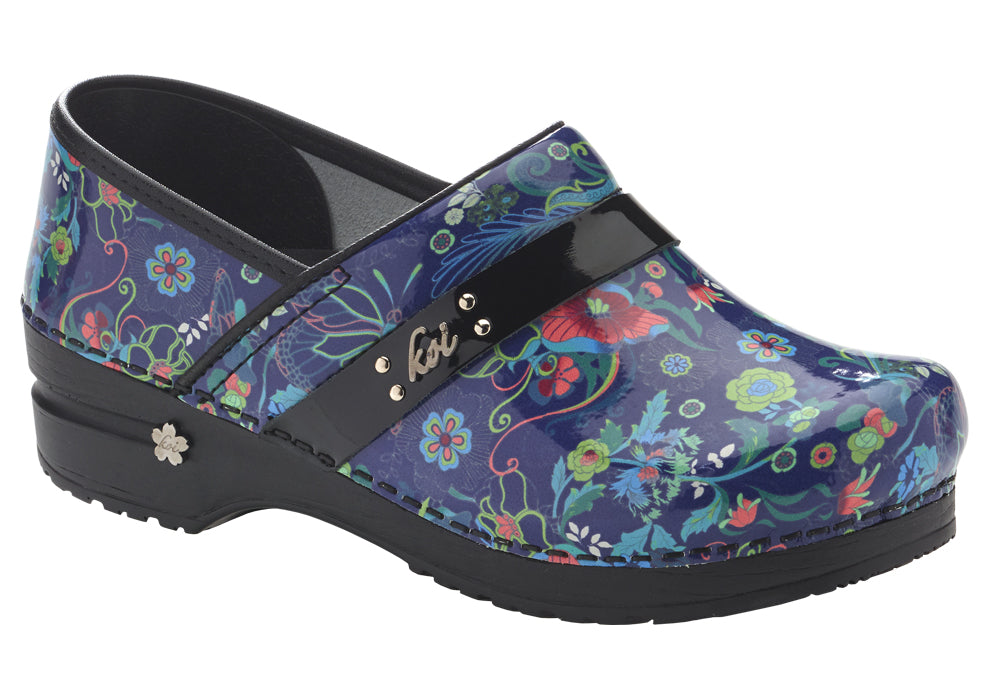
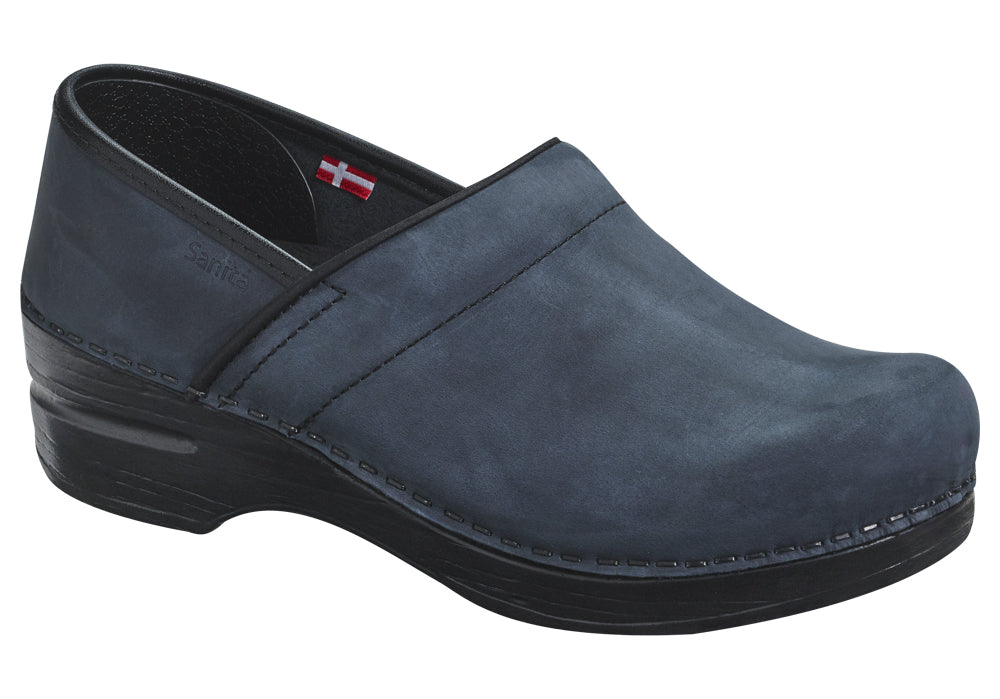
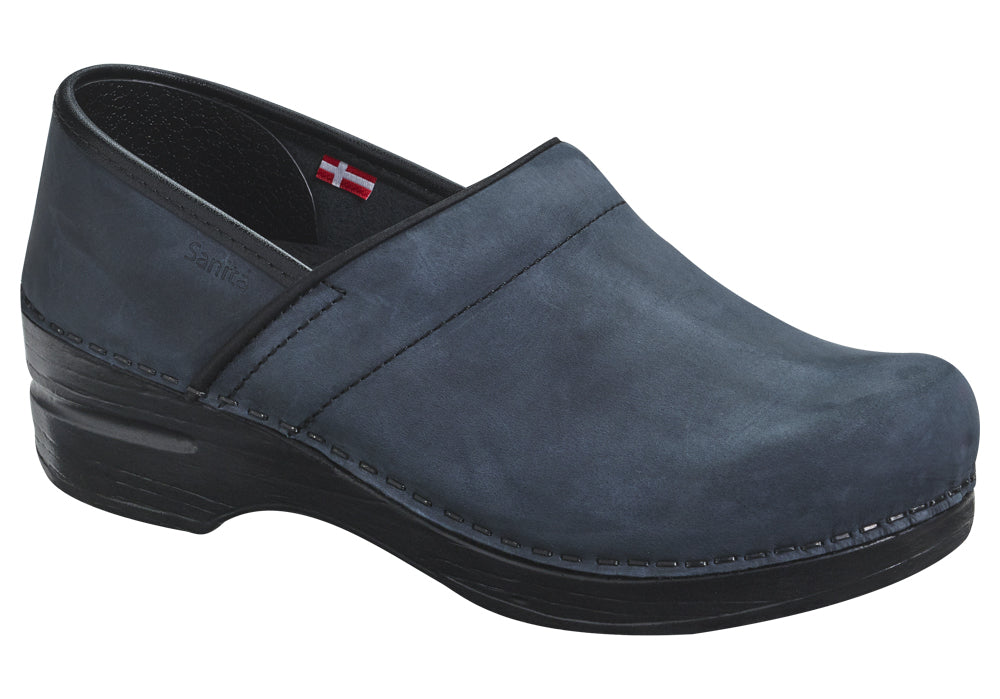
Select styles across Sanita's professional and safety collections, in both women's and men's sizing, feature an ASTM-certified slip-resistant polyurethane outsole. That means those specific pairs have gone through the whole-shoe testing described above, not just a claim printed on a hangtag. The outsole is tested as part of the finished, assembled clog, under wet and contaminated conditions, across the same walking-gait phases that matter in a real kitchen, hospital floor, or busy dining room.
That certified outsole is also paired with the rest of Sanita's usual construction: a contoured footbed, a closed-back design for secure footing during fast-paced shifts, and easy-clean leather that holds up in the environments where slip risk is highest in the first place. The certification covers the grip. The rest of the shoe is built around keeping that grip comfortable for standing all day.
Not every Sanita style carries this certification, since not every style is built for high-slip-risk environments. If certified slip resistance is a requirement for your workplace, the safest approach is the same one outlined above: look for the specific certified styles rather than assuming the whole collection qualifies.
You don't need to become a footwear lab technician to shop smart. You just need to know that "slip-resistant" is a spectrum, not a guarantee, and that the shoes worth trusting are the ones that can point to an actual test standard behind the claim, not just a tread pattern that looks aggressive in a photo.
That's the whole point of certification in the first place: so you don't have to take the brand's word for it.
Sanita's certified slip-resistant clogs are tested to ASTM standards, so you're not relying on a tread pattern's reputation alone. Explore Sanita's Slip-Resistant Styles and move with confidence, no matter the surface.
Register to receive a notification when this item comes back in stock.